Reconstructing undisclosed Plex fixes by behavioral diff
On September 1, Plex released Plex Media Server 1.43.3 and Plex Desktop 1.115.0 to address “a number of security issues,” urging all users to update immediately. CVEs were requested. No identifiers, no CVSS, no technical detail, no exploitation status - just a patch and an unusual all-user email.
Three weeks later the CVEs are still unpublished. So we reconstructed what the fixes do, ourselves.
Method
Plex is closed source, so this was behavioral diff plus binary symbol analysis, not source review:
- Obtain both versions (1.43.2.10687 and 1.43.3.10896) from Plex’s public download endpoints.
- String/symbol diff across the two main binaries. Whole-package rebuild churn means file-hash triage localizes nothing, but release notes named two fix identifiers: PM-5763 (CompanionProxy) and PM-5766 (transcoder preferences).
- Behavioral verification against live local instances of both versions,
authenticated as local admin via the newer
.LocalAdminTokenmechanism.
What the fixes do
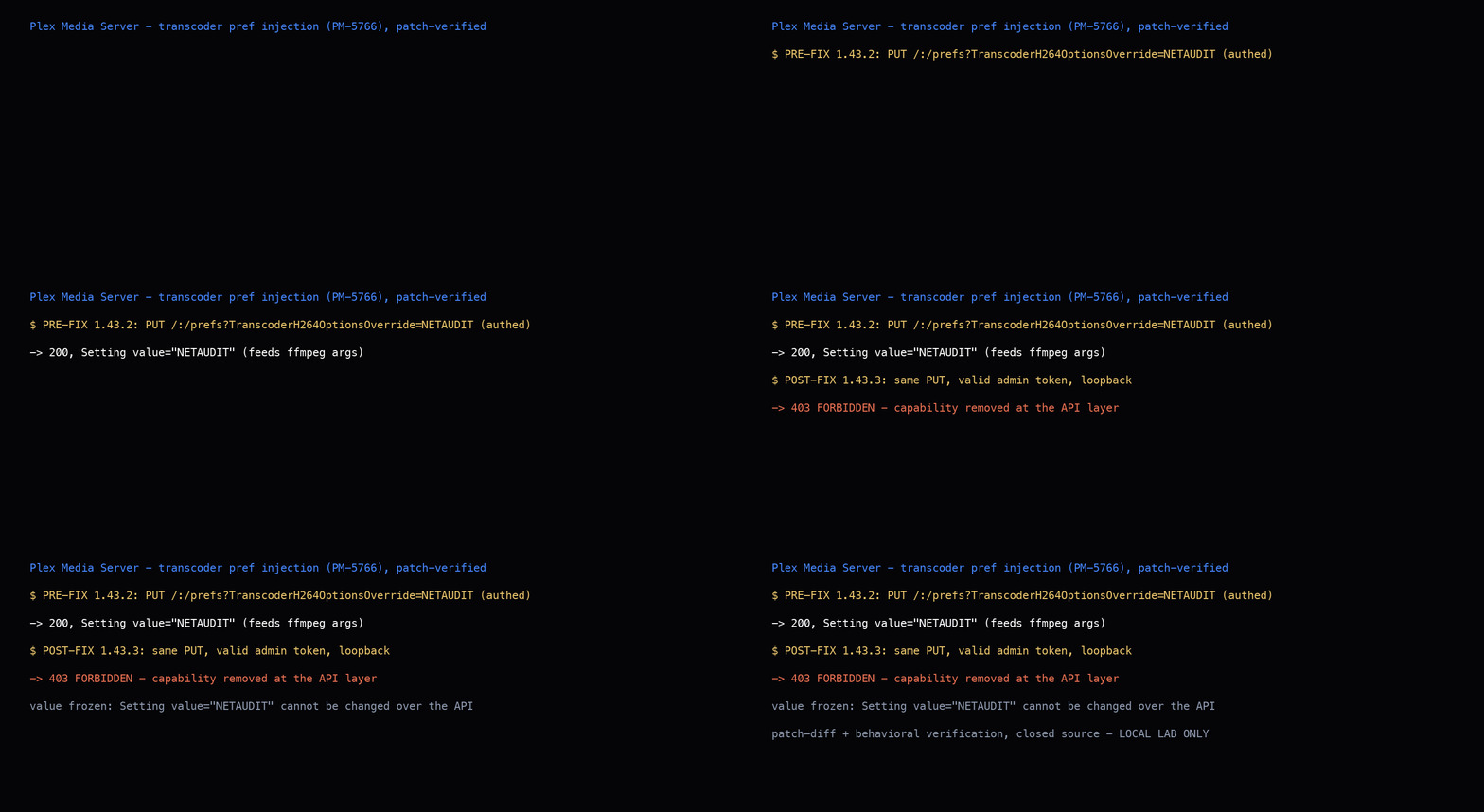
PM-5766: transcoder preference injection, closed by capability removal
On 1.43.2, an authenticated principal can set transcoder options over HTTP:
PUT /:/prefs?TranscoderH264OptionsOverride=AUDITCHANGE
→ 200, Setting value="AUDITCHANGE" (verified from loopback and LAN)
These options feed ffmpeg arguments. Unvalidated transcoder option injection is a classic path to file read/write and RCE through crafted ffmpeg arguments. On 1.43.3 the identical request - valid admin token, loopback - returns 403, and the capability is simply gone: the previously injected value stays frozen in the settings, unchangeable through the API. The fix does not distinguish network from local; the endpoint refuses writes for everyone, which is the strongest form of this fix.
PM-5763: CompanionProxy
The Companion symbol surface is byte-identical between versions - the
reachable handler is CompanionProxyRequestHandler::handleControllerPoll,
an EndpointRouter-mounted handler in the main binary. No new routes, no new
error strings, so the fix is silent validation logic inside compiled code.
Full decompilation diff is the follow-up.
Caveats
- Unauthenticated probes are identical across versions: the fixes are not reachable without a valid token, so the pre-auth attack surface is unchanged and the vulns require authentication. That matters less than it sounds given the deployment profile (media servers on home LANs, shared-machine tokens, and 36,000+ exposed instances per BleepingComputer).
- We have not confirmed the ffmpeg-argument-injection chain end to end; the pref-to-ffmpeg seam is the candidate RCE path and the decompiler work is pending.
Related work
Same audit round as three live proofs, same rule: claims get verified against running instances of both versions, never asserted from code reading alone. The verification discipline is written up in tireless search beats cleverness. Scripts from the audit work live at github.com/terrafying/pocolate.
Disclosure
Coordinated with Plex (security@plex.tv) per their disclosure policy. This post publishes after the advisory window. Their program is discretionary and their policy is private-only disclosure - respect it.
Takeaway
You do not need a CVE number, a writeup, or a PoC to audit a fix. A patch diff plus a behavioral test against two live versions reconstructs most of what the vendor withheld - and tells you whether the fix is complete before the CVEs land.